SAP Nutra
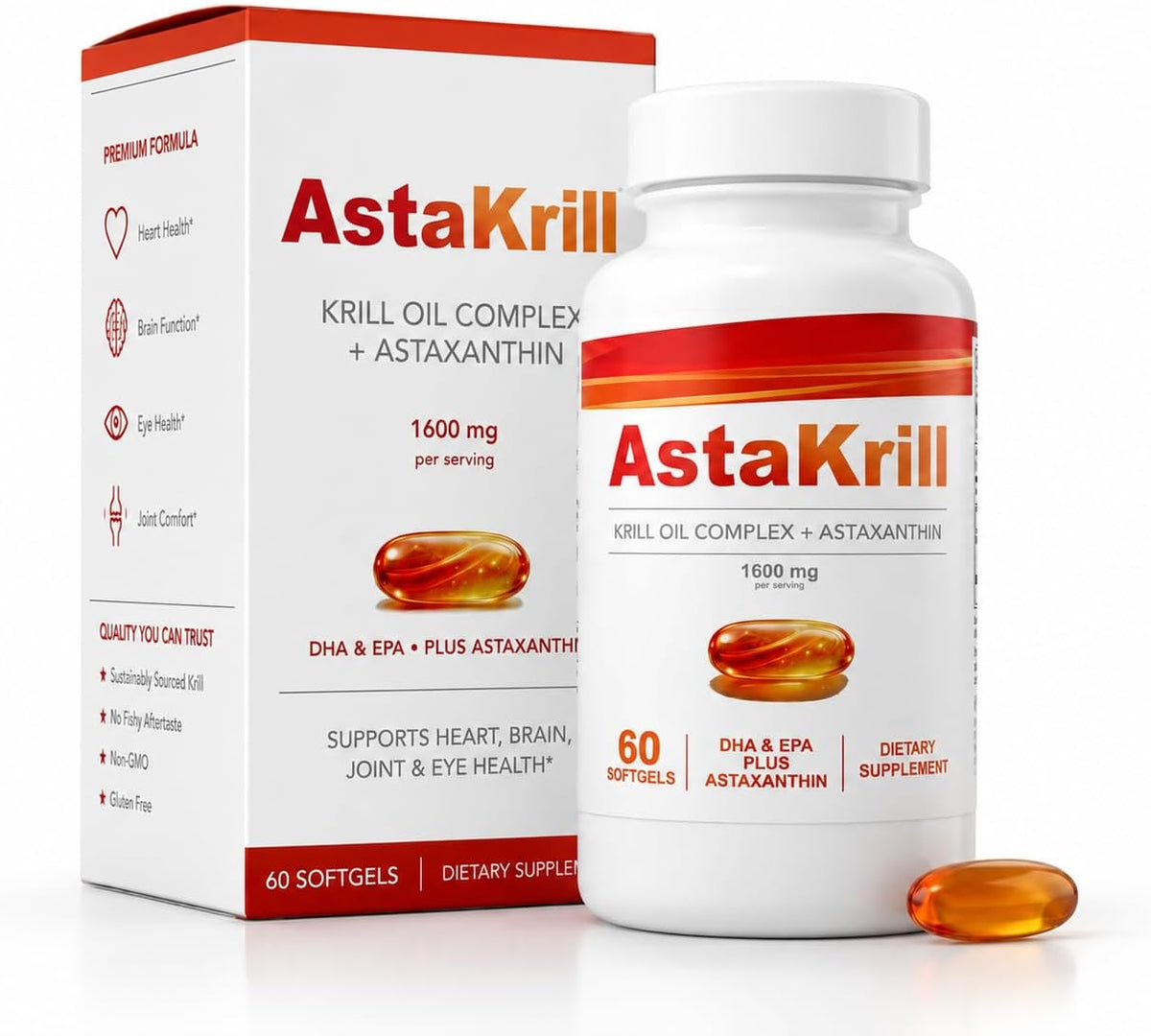
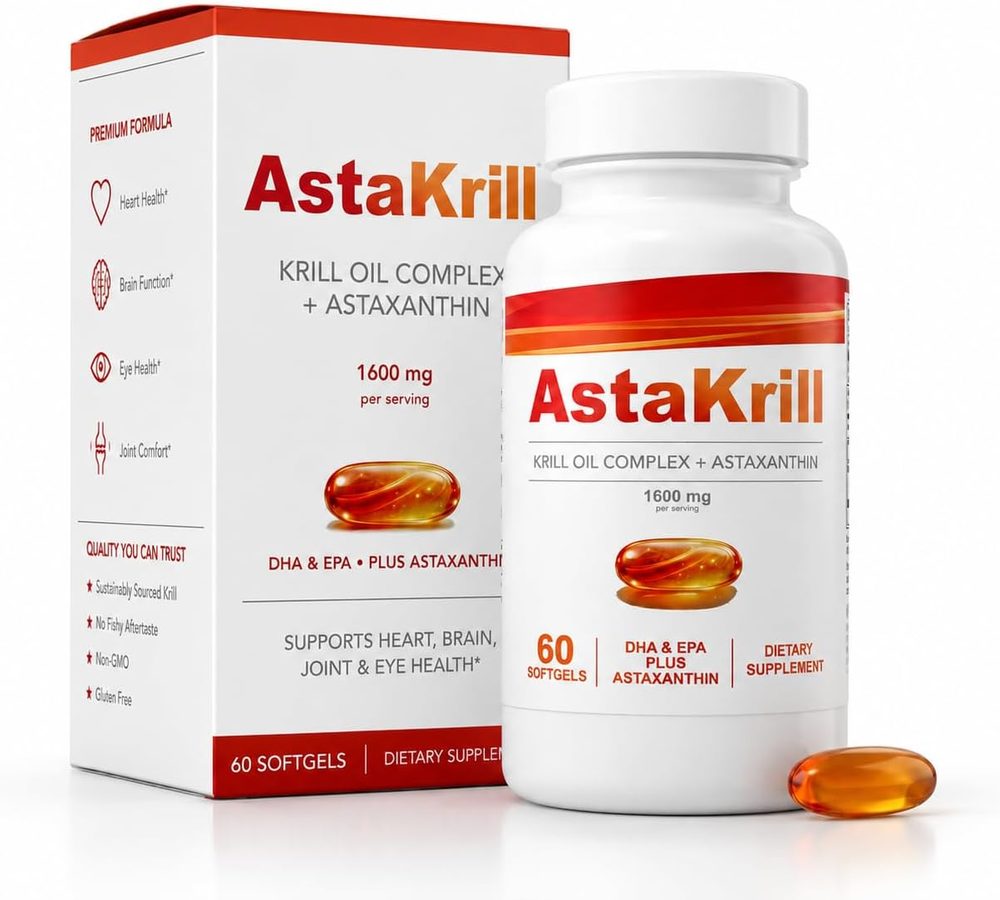
AstaKrill Antarctic Krill Oil with Astaxanthin
$32.99
- 1,600 mg krill oil complex per serving, with omega-3s in phospholipid form
- Naturally occurring astaxanthin, a potent carotenoid antioxidant
- With choline, an essential nutrient for liver and brain*
- Supports heart, brain, joint and eye health*
- Sustainably sourced Antarctic krill — no fishy aftertaste
Sold out on our store right now, but it's in stock on Amazon. Use Buy with Prime below for fast delivery.
Checkout on Amazon · Prime shipping
Free US shipping over $50
30-day money-back guarantee
Third-party tested, every batch
Ingredients & dosing
Every ingredient is listed on the label at its full dose — no proprietary blends. You can find the complete supplement facts panel in the product images and description on this page.
How to use
Take the serving shown on the label with water, ideally at the same time each day. Do not exceed the recommended dose. Consult your physician before use if you are pregnant, nursing, taking medication or have a medical condition.
Shipping & returns
Orders ship within 24 hours on business days, and US shipping is free over $50. Every order is covered by our 30-day money-back guarantee — if a product is not right for you, contact us for a full refund.
Recently viewed
Supplement facts
What's inside AstaKrill
Every active ingredient and its dose, on the label and on the site. Nothing hidden in a proprietary blend.
Per 2-softgel serving · 60 softgels · 30-day supply
Amount%DV
Calories
20
Calories from fat
20
Total fat
1.5 g2%†
Krill oil
As K-REAL® Pure Antarctic Krill Oil, from Euphausia superba
1,600 mg**
Omega-3 fatty acids
320 mg**
EPA (eicosapentaenoic acid)
174 mg**
DHA (docosahexaenoic acid)
120 mg**
Phospholipids
Includes phosphatidylcholine, the body’s main choline carrier
550 mg**
Astaxanthin
Natural astaxanthin
2 mg**
** Daily Value (DV) not established. † Percent Daily Values based on a 2,000 calorie diet. Other ingredients: gelatin (Kosher & Halal), vegetable glycerin, purified water, natural lemon oil. Contains: shellfish (krill). These statements have not been evaluated by the Food and Drug Administration. This product is not intended to diagnose, treat, cure, or prevent any disease.
Why people take it
Antarctic krill oil benefits
AstaKrill is a single source of omega-3s, astaxanthin and choline — three nutrients that pull in the same direction.
Heart & circulation
The omega-3s EPA and DHA support cardiovascular health and healthy circulation.*
Brain & memory
DHA is a key structural fat in the brain. Phospholipid omega-3s support memory, focus and long-term cognitive health.*
Joint comfort
Omega-3s support joint comfort and mobility as part of an active lifestyle.*
Eye health
DHA is concentrated in the retina, where it supports normal vision.*
Antioxidant defence
Astaxanthin — one of nature's most potent carotenoid antioxidants — helps protect cells from oxidative stress.*
Liver & choline
Naturally occurring choline supports liver function and normal fat metabolism.*
*These statements have not been evaluated by the Food and Drug Administration. This product is not intended to diagnose, treat, cure, or prevent any disease.


More than an omega-3
Three nutrients in one softgel
Krill doesn't just carry EPA and DHA. The same phospholipids that carry its omega-3s deliver choline — essential for liver and brain — while naturally occurring astaxanthin protects the oil from oxidation.
- Phospholipid omega-3s — the same form your cell membranes are built from
- Choline on board — an essential nutrient most diets run short of
- Astaxanthin keeps the oil fresh, with no added preservatives
Why krill oil
Not all omega-3s are delivered the same way
Krill oil doesn't just give you EPA and DHA — it gives them to you in the form your cells are actually built from.
The omega-3 fatty acids EPA and DHA are essential fats: your body can't make them in any useful amount, so they have to come from your diet. They're the raw material for flexible cell membranes, a balanced inflammatory response, and healthy brain, heart and eye tissue — and most modern diets fall well short of them.*
Krill oil is one of the most efficient ways to top them up. Unlike standard fish oil, a meaningful share of krill's omega-3s are carried on phospholipids — the very molecules your cell membranes are built from — so they're readily recognised and put to use. The same oil naturally carries astaxanthin, an antioxidant that keeps it fresh, and choline, an essential nutrient most people under-eat.*
Essential fats you can only eat
EPA and DHA aren't made by the body. A clean daily marine source keeps your levels topped up for heart, brain and whole-body health.*
A form your body recognises
Phospholipid-bound omega-3s integrate into cell membranes readily — and krill softgels are small, with none of the fishy repeat of ordinary fish oil.*
More than an omega-3
Every serving also carries naturally occurring astaxanthin — a potent antioxidant — plus choline for liver and brain, from sustainably harvested Antarctic krill.*
*These statements have not been evaluated by the Food and Drug Administration. This product is not intended to diagnose, treat, cure, or prevent any disease.
Krill vs fish oil
How AstaKrill compares to a regular fish oil
Both deliver omega-3s. What they deliver them with is where krill pulls ahead.
Feature
AstaKrill
Regular fish oil
Omega-3 form
Phospholipid-bound EPA & DHA
Triglycerides or ethyl esters
Built-in antioxidant
Astaxanthin, naturally occurring
None — oil oxidises faster
Choline
Naturally present as phosphatidylcholine
Not present
Fishy aftertaste
None
Common
Softgel size
Small and easy to swallow
Often large
Sourcing
Sustainably harvested Antarctic krill
Varies by fishery
Choosing well
What separates a good krill oil
Krill oils are not interchangeable. These are the things worth checking on any label, ours included.
What to look for
AstaKrill
Phospholipid-bound omega-3sThe form your cell membranes are built from. Cheap blends cut krill with standard fish oil.
K-REAL® Pure Antarctic Krill Oil with 550 mg of phospholipids per serving, no fish oil filler.
Real astaxanthin contentIt keeps the oil from oxidising and adds antioxidant support of its own. Most labels don’t even state a number.
A full 2 mg of natural astaxanthin per serving, stated on the label.
Full label transparencyExact EPA, DHA, phospholipid and astaxanthin numbers, not a “krill oil blend”.
Every active and its dose, above and on the label.
Third-party testingMarine oils should be independently checked for purity and freshness.
Every batch, independently tested.
Sustainable Antarctic sourcingThe Southern Ocean krill fishery is one of the most tightly managed on earth. Look for it named.
Sustainably harvested Antarctic krill, Euphausia superba.
A softgel you’ll actually takeOversized capsules and fishy repeat are why most people quit fish oil.
Small softgels, no fishy burps or aftertaste.
AstaKrill FAQ
AstaKrill, answered
How is krill oil different from fish oil?
Both provide the omega-3s EPA and DHA. In krill oil a meaningful share of those omega-3s is bound to phospholipids rather than triglycerides, and the oil naturally contains astaxanthin and choline. Many people also find krill softgels smaller and easier on the stomach.
Why does choline matter?
Choline is an essential nutrient used to build cell membranes, move fats through the liver and make the neurotransmitter acetylcholine. Most diets fall short of the recommended intake, and in krill oil it arrives as phosphatidylcholine — a highly usable form.
I have a shellfish allergy — can I take AstaKrill?
No. AstaKrill is made from Antarctic krill, a crustacean, and is not suitable for people with shellfish allergies. If you are unsure, consult your physician before use.
Will it give me fishy burps?
Krill oil is gentler than most fish oils, and the astaxanthin content keeps the oil from oxidising — the main cause of a fishy aftertaste. Taking your serving with a meal makes it gentler still.
How long until I notice a difference?
Omega-3s work by building up in your cell membranes, so give it time. Most research on heart, joint and cognitive outcomes uses 4–12 weeks of consistent daily use.
How should I take it?
Take 2 softgels once a day, ideally with a meal that contains some fat — omega-3s absorb better alongside food.
Is krill oil an omega-3?
Krill oil is a source of omega-3s rather than an omega-3 itself. Each softgel carries the two marine omega-3 fatty acids that matter most, EPA and DHA, bound to phospholipids. That phospholipid packaging is what sets krill apart from standard fish oil, which delivers the same fats as triglycerides or ethyl esters.
What is Antarctic krill oil?
It’s oil pressed from Euphausia superba, a small crustacean that swarms in the Southern Ocean around Antarctica. Because krill sit near the bottom of the food chain and live in cold, clean water, the oil is naturally low in contaminants and comes with its own astaxanthin and choline on board.
How much krill oil per day? Is 1,000 mg enough?
Most published krill oil research uses between one and three grams a day. A single AstaKrill serving delivers 1,600 mg of pure Antarctic krill oil, which sits comfortably inside that range. Take it once daily with food; there’s no benefit to megadosing.
What are phospholipids and why do they matter?
Phospholipids are the building blocks of every cell membrane in your body. In krill oil, EPA and DHA arrive already attached to them, so the fats slot into your cells in a form they recognise. It’s the main reason krill softgels can stay small while ordinary fish oil capsules run large.
Where does the krill come from? Is it sustainable?
Our krill is harvested in the Southern Ocean, one of the most tightly regulated fisheries in the world, with catch limits set at a small fraction of the total krill biomass. Sourcing is named on every label: sustainably harvested Antarctic krill, nothing else.
Complete your stack